licensed online casino
The popularity of online casinos has made gambling more accessible than ever. Players can explore hundreds of games, make deposits and enjoy casino entertainment without leaving home. However, the growing number of gambling websites also creates a challenge: not every platform operates legally or follows recognised industry standards.
Some websites hold valid gambling licences and are subject to regulatory requirements. Others operate without proper authorisation, provide misleading information or fail to protect their customers. Knowing how to distinguish between these platforms is an important part of making informed decisions about online gambling.
So, how can you tell whether an online casino is licensed or potentially illegal? Let’s look at the main signs, verification methods and warning signals.
1. Check the Casino’s Gambling Licence
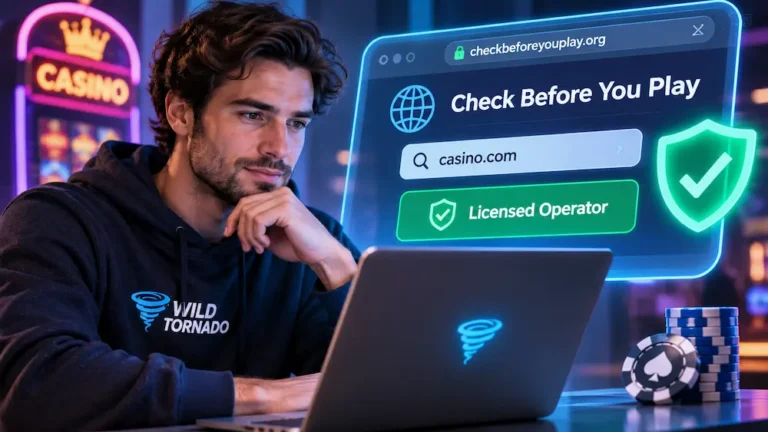
The first and most important step is to find information about the casino’s gambling licence. A legitimate operator should clearly identify the company responsible for the platform and provide details about its regulatory authorisation.
You can usually find this information in the website footer or in sections such as About Us, Terms and Conditions or Responsible Gambling.
A licence notice should ideally include:
The name of the licensed company.
The name of the licensing authority.
A licence or registration number.
Relevant legal information about the operator.
The applicable jurisdiction.
A website that only displays a generic statement such as “fully licensed” without identifying the regulator or providing verifiable details deserves closer examination.
Remember that the presence of a licence logo alone does not prove that a casino is authorised. The information must be independently verifiable.
2. Verify the Licence on the Regulator’s Website
Finding a licence number is only the beginning. The next step is to check whether the information is genuine.
Many gambling regulators maintain public registers of authorised operators. These databases allow visitors to search for a company, check its licensing status and sometimes verify the domains covered by its authorisation.
When checking a licence, pay attention to:
Company name: Does it match the operator identified on the casino website?
Licence status: Is the authorisation active, suspended or revoked?
Website domain: Does the regulator’s record cover the exact domain you are visiting?
Licence scope: Does the authorisation cover the type of gambling services offered?
Regulatory details: Are the licence number and other details consistent?
Some well-known gambling authorities include the UK Gambling Commission, the Malta Gaming Authority and the Alcohol and Gaming Commission of Ontario.
However, licensing rules differ between countries. A licence issued in one jurisdiction does not automatically authorise an operator to offer gambling services everywhere. Players should check the rules applicable to their own location.
3. Look for Transparent Company Information
Licensed online casinos generally provide information about the legal entity operating the platform. This helps players understand who is responsible for the service.
Look for the following details:
Registered company name.
Business registration information, where applicable.
Registered address.
Contact information.
Terms and Conditions.
Privacy Policy.
Responsible Gambling Policy.
A website that hides its operator’s identity, provides contradictory company details or lists no meaningful contact information may present additional risks.
It is also worth checking whether the legal company named in the casino’s documents matches the entity identified in the licensing authority’s public register.
4. Examine Payment and Withdrawal Conditions
Payment transparency is another important factor when assessing an online casino.
A properly operated platform should explain how deposits and withdrawals work, which payment methods are supported and whether transaction fees or limits apply.
Before registering, review:
Minimum and maximum deposit amounts.
Withdrawal limits.
Processing times.
Possible transaction fees.
Identity verification requirements.
Bonus wagering conditions.
Be particularly cautious if a website promises guaranteed winnings, demands unexpected payments to release withdrawals or repeatedly changes its withdrawal requirements.
Payment problems do not automatically prove that a casino is operating illegally, but unclear financial conditions are a reason to investigate further.
5. Check Security and Data Protection
An online casino may request personal information, payment details and identity documents. Therefore, website security and data protection should be part of your assessment.
Start by checking whether the website uses HTTPS and displays a valid security certificate. This helps establish an encrypted connection between your browser and the website.
However, HTTPS alone does not prove that a casino is licensed or trustworthy. Even an illegal website can use encryption.
Also review the platform’s Privacy Policy. It should explain:
What personal information is collected.
Why the information is needed.
How it is stored and protected.
Whether information is shared with third parties.
How users can exercise their privacy rights.
A legitimate operator should provide understandable information about its data protection practices.
6. Look for Responsible Gambling Tools
Responsible gambling is an important part of regulated online casino operations. Depending on the jurisdiction, operators may be required to provide tools that help players manage their activity.
These can include:
Deposit limits.
Session time limits.
Reality checks.
Temporary account breaks.
Self-exclusion options.
Access to responsible gambling resources.
The exact requirements vary between regulators, but a complete absence of responsible gambling information is a warning sign.
A platform should not encourage players to chase losses, ignore spending limits or treat gambling as a reliable way to make money.
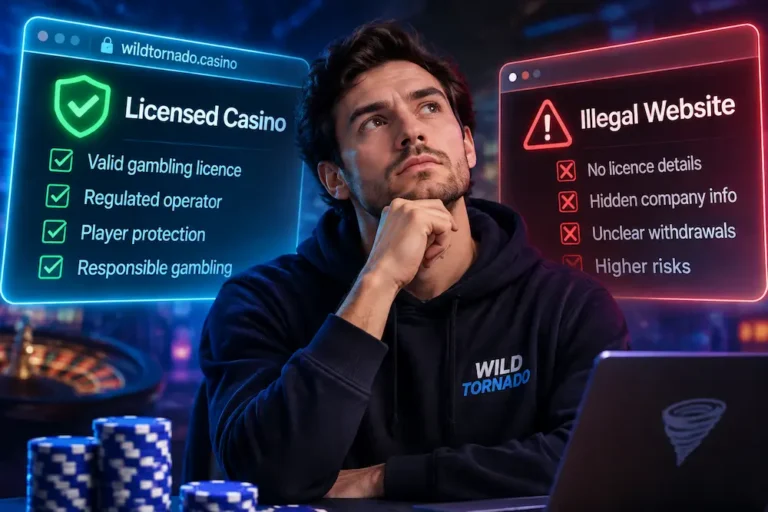
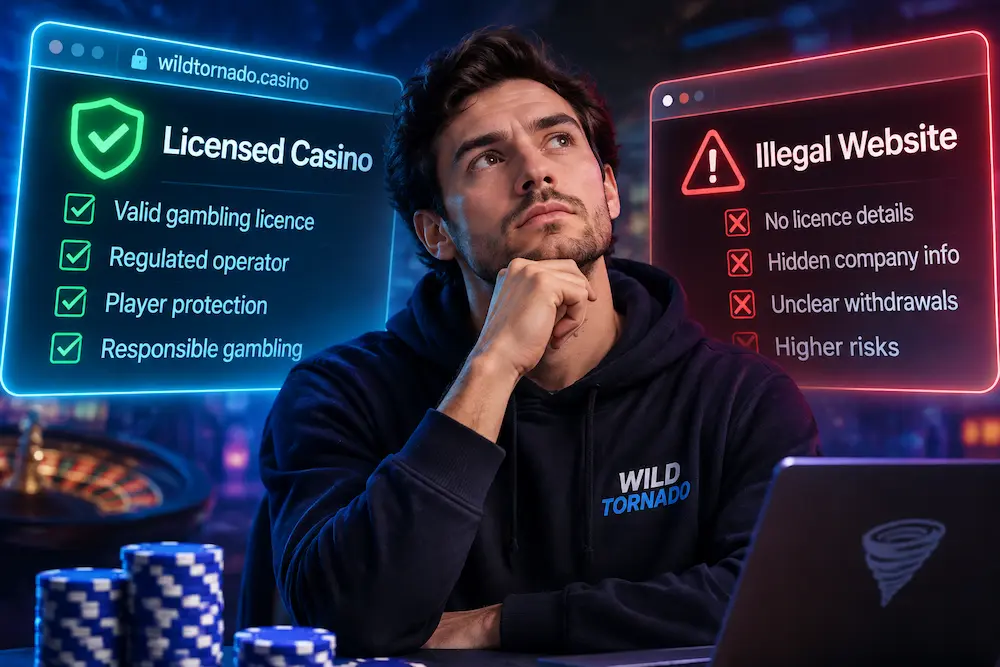
7. Recognise Common Warning Signs of Illegal Casino Websites
Some suspicious platforms use similar tactics to attract visitors. Recognising these signs can help players avoid unnecessary risks.
| Warning sign | Why it matters |
|---|---|
| No licence information | The operator’s regulatory status cannot be easily established. |
| Fake licence badges | Logos and licence numbers may be copied or fabricated. |
| Hidden company details | It is difficult to identify who operates the website. |
| Unrealistic promises | Guaranteed profits and risk-free winnings are misleading. |
| Unclear withdrawal rules | Players may face unexpected restrictions. |
| No proper customer support | Resolving account or payment problems may become difficult. |
| Suspicious website redirects | Visitors may be sent to unrelated or potentially harmful pages. |
| Pressure to deposit immediately | Aggressive tactics can discourage careful verification. |
One warning sign does not necessarily establish that a website is illegal. However, several of them appearing together should encourage players to stop and investigate before sharing personal information or making a deposit.
8. What Is the Difference Between a Licensed and an Unlicensed Casino?
The main difference concerns regulatory authorisation and the obligations associated with operating in a particular market.
A licensed casino has received permission from a relevant authority to provide specified gambling services within a defined jurisdiction. It must comply with the applicable licensing conditions and regulatory requirements.
An unlicensed casino does not have the necessary authorisation for the market in question. This does not always mean that the operator is illegal everywhere: it may hold a licence in another jurisdiction but lack permission to serve certain countries.
| Feature | Licensed casino | Unlicensed casino |
|---|---|---|
| Regulatory authorisation | Holds relevant authorisation | Lacks required local authorisation |
| Licence verification | Can be checked through the regulator | No valid authorisation to verify |
| Company information | Regulatory and operator details are generally available | May be incomplete or difficult to confirm |
| Player protection | Subject to applicable regulatory requirements | May not provide equivalent safeguards |
| Complaints | May have access to regulatory complaint procedures | Fewer formal options may be available |
| Responsible gambling | Must follow applicable requirements | Protections may be limited or absent |
Importantly, licensing does not guarantee that every transaction will be problem-free or that a player will win. It provides a regulatory framework and certain protections, not a promise of financial results.
9. What Should You Do If You Find a Suspicious Casino?
If you suspect that an online casino is operating without the required authorisation, avoid making deposits or sharing sensitive personal information until its status has been clarified.
Here are some practical steps:
Stop financial transactions. Do not deposit additional money while investigating the website.
Save relevant information. Keep screenshots of the licence details, payment records, emails and account activity.
Contact customer support. Ask the operator to provide the legal company name, regulator and licence number.
Contact the regulator. If the information appears false or inconsistent, report your concerns to the relevant authority.
Protect your accounts. If you have shared payment details or passwords on a suspicious website, consider contacting your bank and changing compromised credentials.
If you have already registered, avoid sending additional identity documents until you understand who is requesting them and why.
10. A Simple Checklist Before Registering at an Online Casino
You do not need specialist knowledge to perform a basic casino verification. A few checks can help you identify potential problems before creating an account.
Online Casino Safety Checklist
The UK Gambling Commission, for example, publishes a public register containing information about licensed businesses, permitted activities, trading names, domains and regulatory actions. This illustrates why checking an official register is more reliable than relying on a logo displayed on a casino website.
Conclusion
Distinguishing a licensed online casino from an illegal gambling website starts with checking its regulatory status. A licence logo, attractive design or impressive welcome offer is not enough to establish that an operator is authorised.
Always verify the legal company, licence number, regulator, current status and exact website domain. Pay attention to payment conditions, data protection and responsible gambling tools as well.
Most importantly, remember that licensing requirements depend on your country or region. A casino authorised in one jurisdiction may not be permitted to accept players from another. Taking a few minutes to verify these details can help you make a more informed decision and avoid unnecessary risks.
Author

 I am the Director of a company that specializes in providing a range of services including marketing analytics, web design, email marketing, content creation, and graphic design. With over 13 years of experience in analytics and marketing, I have successfully managed teams and developed strategies that cater to various client needs. My role involves overseeing projects, ensuring quality service delivery, and driving business growth through effective marketing solutions.

 I am the Director of a company that specializes in providing a range of services including marketing analytics, web design, email marketing, content creation, and graphic design. With over 13 years of experience in analytics and marketing, I have successfully managed teams and developed strategies that cater to various client needs. My role involves overseeing projects, ensuring quality service delivery, and driving business growth through effective marketing solutions.